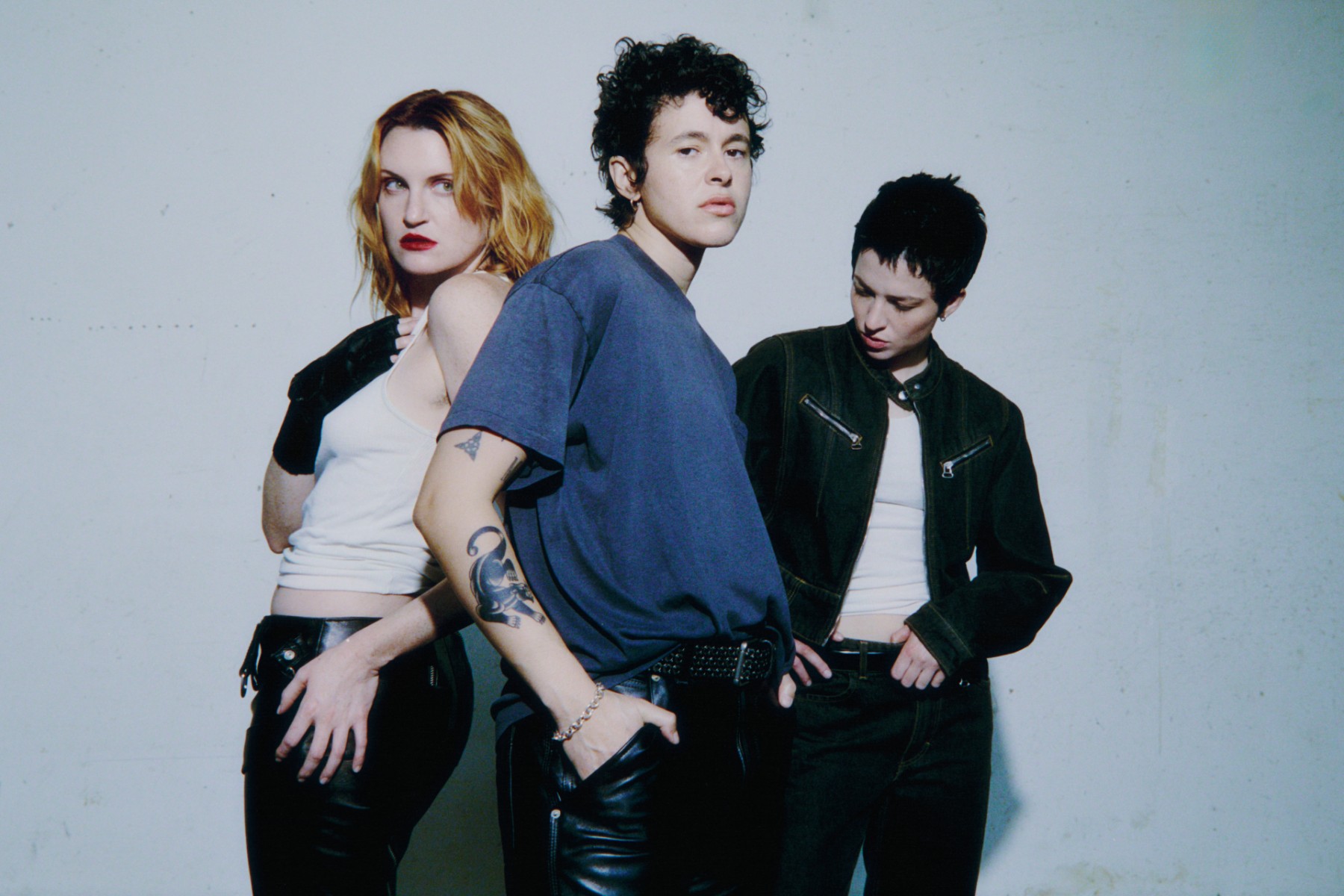
MUNA are putting movement at the center of their next chapter. In a new Billboard interview, the band discuss Dancing On the Wall, their fourth studio album, released via Saddest Factory Records, and the intentionally uptempo, queer dance-pop direction shaping the project.
The conversation frames the album as a record built for bodies in motion. Rather than leaning into dance-pop as a surface-level style, MUNA position Dancing On the Wall around the energy of queer club spaces: places where release, performance, intimacy, and self-invention can all happen at once.
That sense of physicality appears to be central to the album’s identity. The Billboard interview highlights how the group approached the record with live performance in mind, drawing a line between the songs’ dance-floor momentum and the charge of a MUNA show. It is a direction that treats the stage and the club not as separate worlds, but as connected spaces where pop music becomes communal.
For MUNA, the shift toward a more uptempo sound also speaks to the way dance music can carry emotional weight without slowing down. The album’s queer club influences suggest a project interested in joy and catharsis at the same time. It is music designed to move, but not necessarily to escape feeling.
Dancing On the Wall arrives as the band’s fourth studio album, a milestone that naturally invites questions about evolution. In the Billboard piece, the focus is less on reinvention for its own sake and more on sharpening a sensibility that has long surrounded MUNA’s work: pop music as a space for honesty, drama, style, and shared release.
The album’s visual world is also part of that story. Billboard notes the project’s aesthetic alongside its sound, pointing to a rollout where image and music are working in tandem. For a band exploring queer dance-pop, visuals are not simply decoration; they help build the atmosphere around the songs, giving shape to the world the album asks listeners to enter.
That visual emphasis matches the record’s attention to performance. Dance-pop often depends on more than hooks and production; it thrives on gesture, presence, and the feeling that a song can expand in front of an audience. By tying Dancing On the Wall to live-show energy, MUNA underline that these tracks are meant to function beyond headphones.
The result, as presented in the interview, is an album rooted in motion and community. Its club influence is not just about tempo, and its pop framing is not just about gloss. Dancing On the Wall appears to be MUNA’s way of exploring how queer spaces, live performance, and carefully built aesthetics can inform a full pop record.
As new music cycles often rush to define an album in one phrase, MUNA’s discussion with Billboard offers a more textured picture. Dancing On the Wall is a dance-pop album, but it is also a record about where dance-pop lives: in clubs, onstage, in visual language, and in the collective charge of people finding themselves through sound.